Building a cell model for juvenile idiopathic arthritis.
My work is on juvenile idiopathic arthritis, the most common form of arthritis in children.
Most JIA research depends on primary patient cells, which are scarce and hard to work with.
I developed a model to increase research accessibility and, hopefully, to help find new
therapeutic targets.
A Novel In Vitro Cell Culture Model for Juvenile Idiopathic Arthritis
Bergen County Academies · Medicine & health · 2026
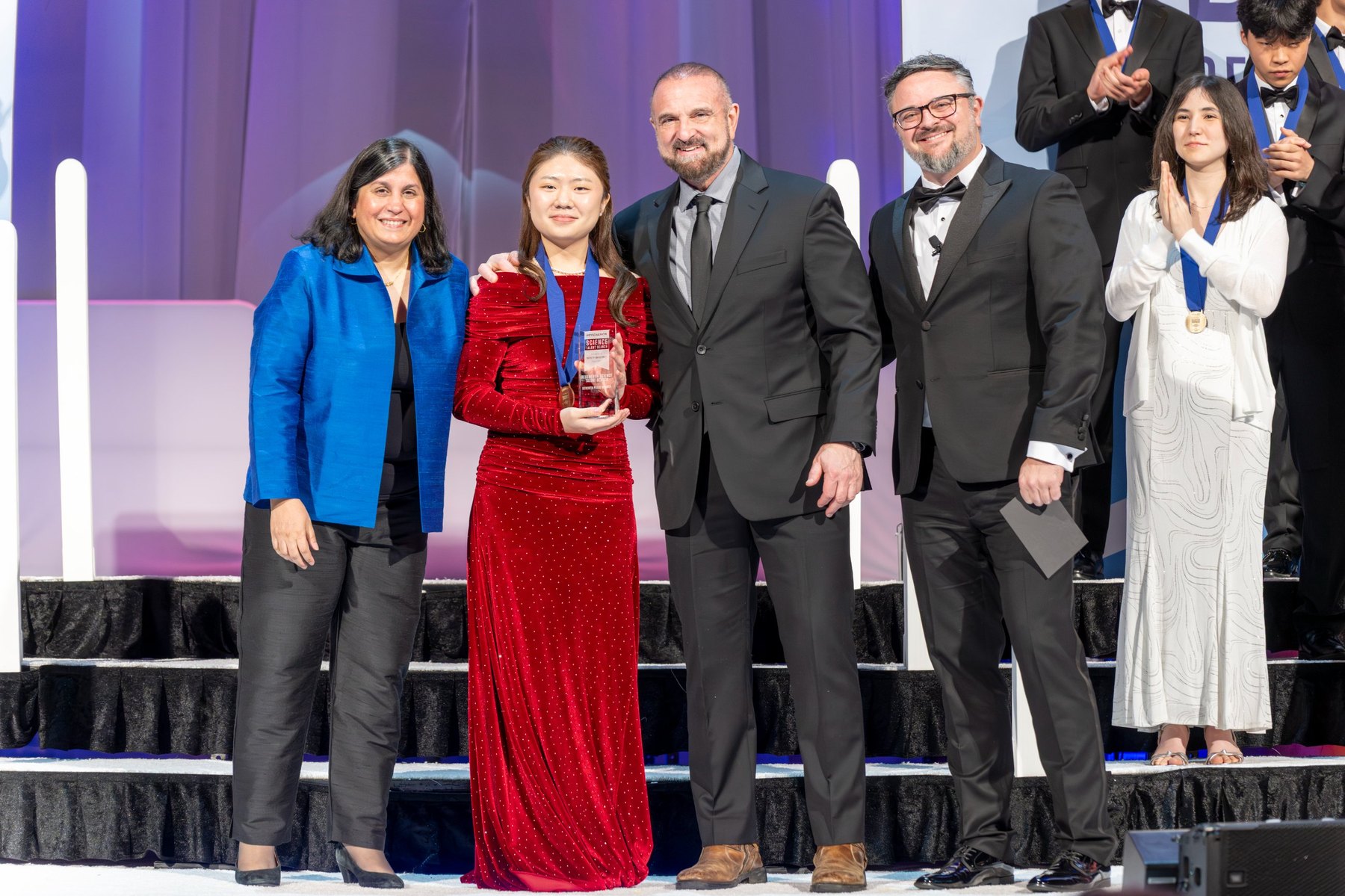
7th place nationally at the Regeneron Science Talent Search
2026 · Washington, D.C. · $70,000 scholarship
The Regeneron Science Talent Search is the nation's oldest and most prestigious original research
competition for high school students, run by Society for Science since 1942. Each year forty
finalists are selected to spend a week in Washington, D.C., showing their potential as scientists
through judging. In 2026, out of more than 2,600 entrants, I was named a finalist and placed 7th
in the country, and was awarded a $70,000 scholarship.
With Maya Ajmera, George Yancopoulos, and the head judge of the Science Talent Search, accepting 7th place at the awards gala, Washington, D.C., March 2026.
The research
JIA is a chronic disease in children that causes joint pain and damage, but is not well understood.
I aimed to build a model of fibroblast-like synoviocytes (FLS). FLS cells in the joints are
affected by JIA, so a model to study them in the lab could help scientists learn about the disease.
After reviewing past research, I chose SW982, a cell line used to study rheumatoid arthritis, and
treated it with bone morphogenetic protein 4 (BMP4), a protein linked to JIA-related joint damage.
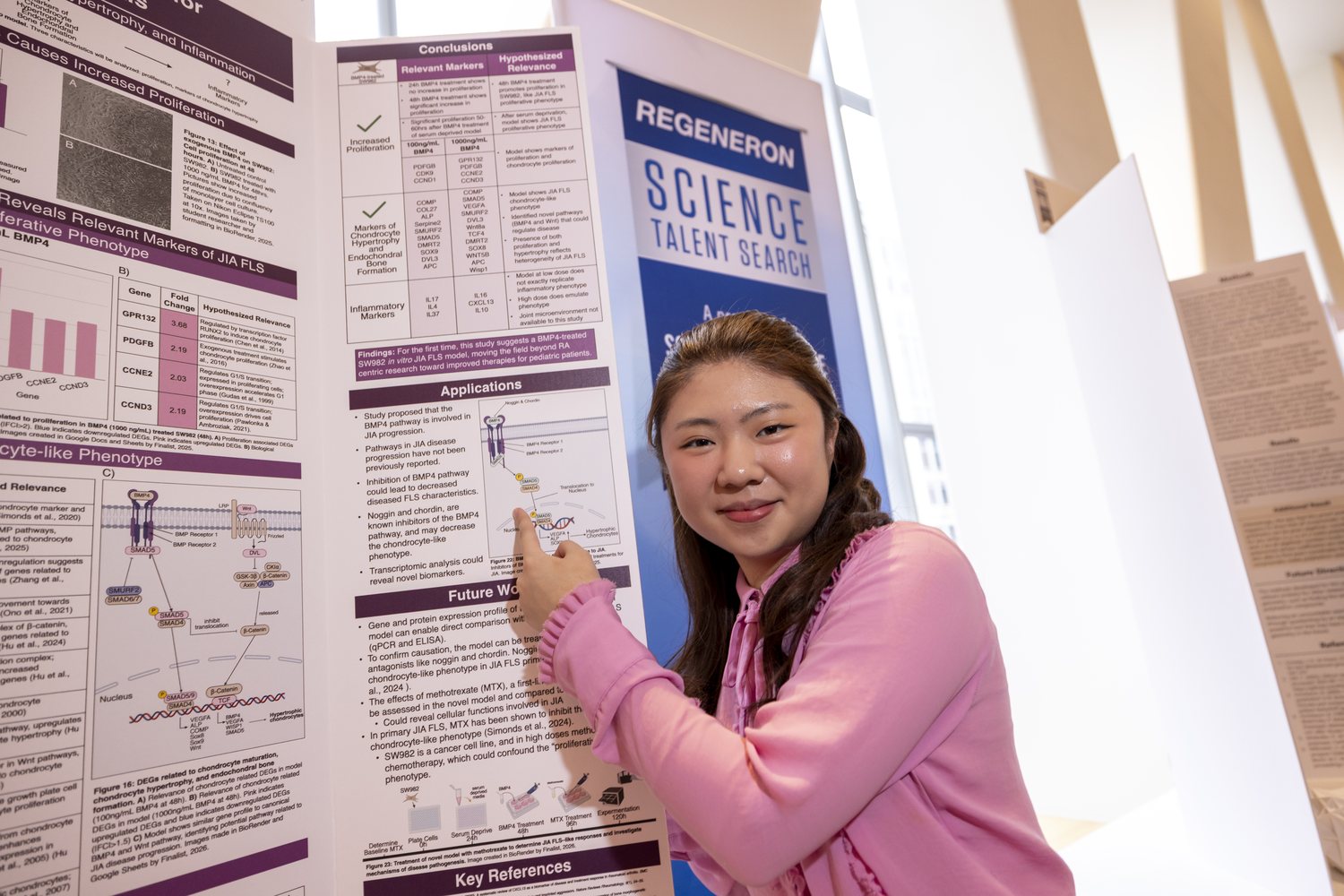
I found that cells treated with BMP4 behaved like JIA FLS in their growth patterns and gene
expression. I believe this model can help researchers better study JIA and find new treatments.
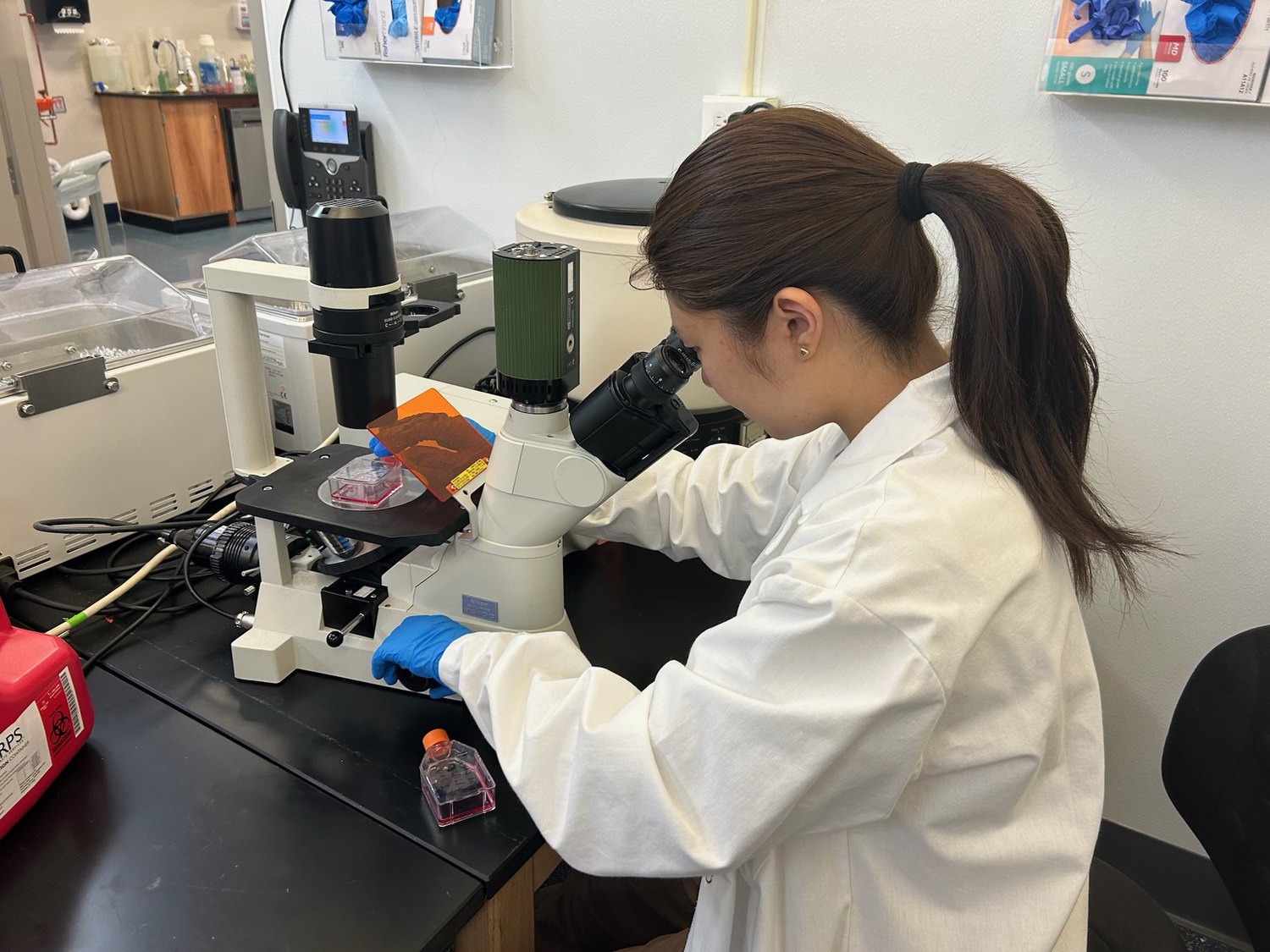
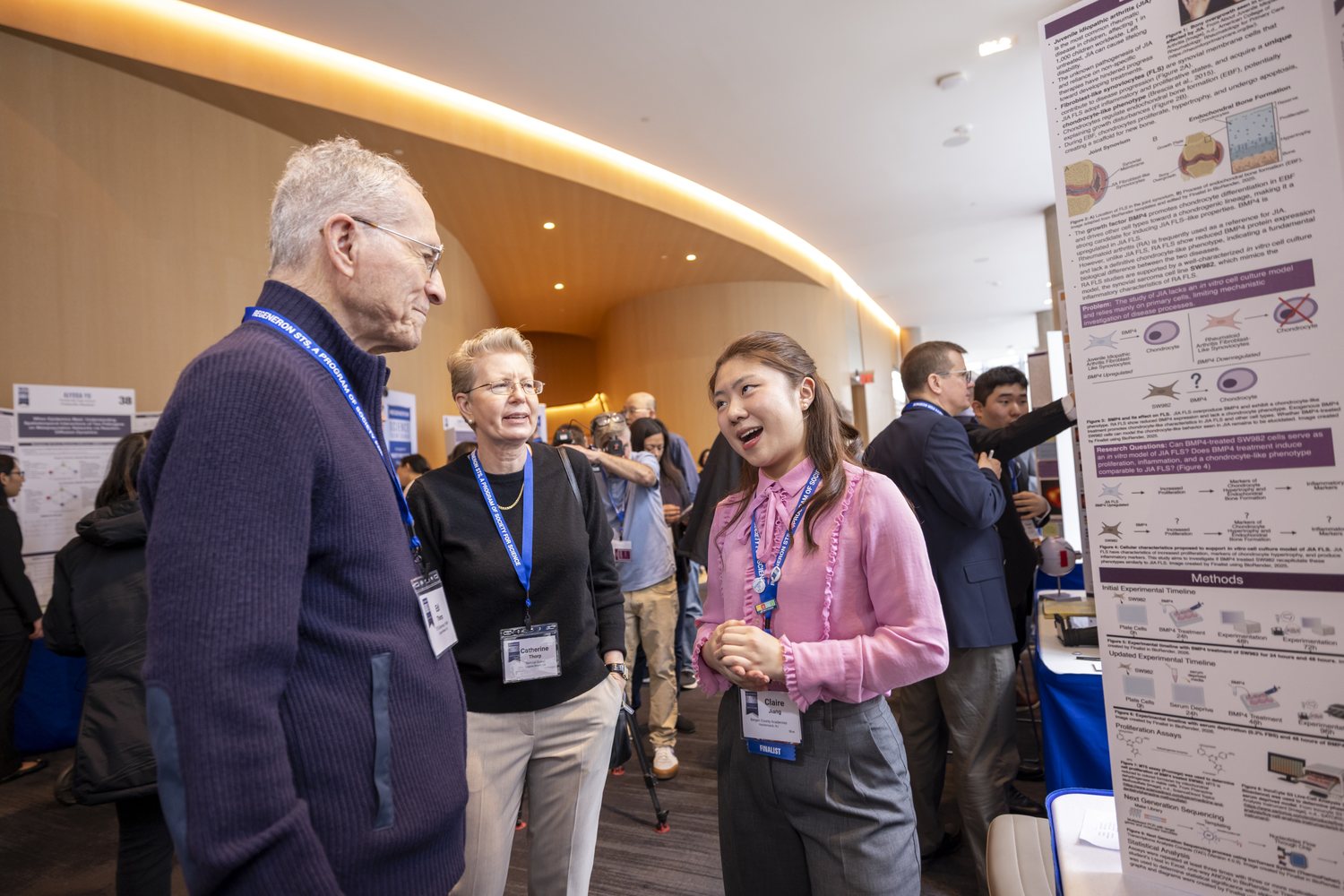
Checking SW982 cultures under the scope.Walking through the conclusions and proposed BMP4 pathway at Public Day.Regeneron STS Public Day, Washington, D.C., March 2026.